The Great Wildebeest Migration
The Great Wildebeest Migration is one of the most spectacular natural events on Earth and one of the Seven Natural Wonders of Africa. Each year, roughly 1.5–2 million wildebeest, along with hundreds of thousands of zebras, Thomson’s and Grant’s gazelles, and smaller numbers of other herbivores, move in a roughly clockwise cycle of about 800 km (500 miles) across the Serengeti-Mara ecosystem of Tanzania and Kenya.
Driven primarily by rainfall and the search for fresh, nutrient-rich grass and water, the herds follow the rains in a continuous, year-round journey. There is no single start or end point. The bulk of the migration occurs in Tanzania’s Serengeti National Park, with the herds typically spending several months in Kenya’s Masai Mara National Reserve. Predators—including lions, leopards, cheetahs, hyenas, and Nile crocodiles—follow the herds, creating dramatic scenes of the circle of life. Timing can vary with the rains (which have become less predictable due to climate patterns), so the migration is fluid rather than rigidly scheduled.
Two of the most celebrated phases are the calving season and the river-crossing season.
Wildebeest Calving Season Safaris
From approximately late January through March (peaking in February), the herds concentrate on the short-grass plains of the southern Serengeti. Here, nutrient-rich volcanic soils support highly nutritious grasses ideal for lactation. In a synchronized birthing event lasting only a few weeks, more than 8,000 calves can be born each day. The young are remarkably quick to stand and run, but the sheer numbers still attract intense predator activity. Lions, hyenas, cheetahs, jackals, and wild dogs take advantage of the vulnerable newborns, making this period a raw display of birth, survival, and predation.
Where can you see the Wildebeest Calving Season?
The primary location is the southern Serengeti plains, especially the Ndutu area (around Lake Ndutu) and the adjacent short-grass plains that extend toward the Ngorongoro Conservation Area. These open landscapes allow excellent visibility of the vast herds and the constant predator-prey interactions.
Why Should You Choose a Wildebeest Calving Season Safari?
This season offers a different kind of spectacle from the more famous river crossings. You witness the beginning of the cycle of life on an enormous scale, with endless plains filled with newborns and intense predator action often close at hand. It is generally less crowded than the peak river-crossing months, the weather is often pleasant after the short rains, and the scenery is lush and green. It is ideal for photographers and wildlife enthusiasts who want to experience the full drama of birth and survival rather than solely the crossings.
Wildebeest Calving Season Safari Overview This exclusive 4-day fly-in safari begins and ends in...
Wildebeest Calving Season Safari Overview Embark on a romantic journey through Tanzania’s most...
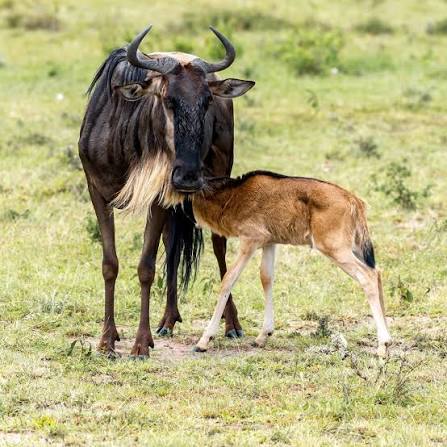
Wildebeest Calving Season Safari Overview Immerse yourself in one of nature’s greatest spectacles on...
Wildebeest Calving Season Safari Overview Experience 5 days of the miracles of new life during the...
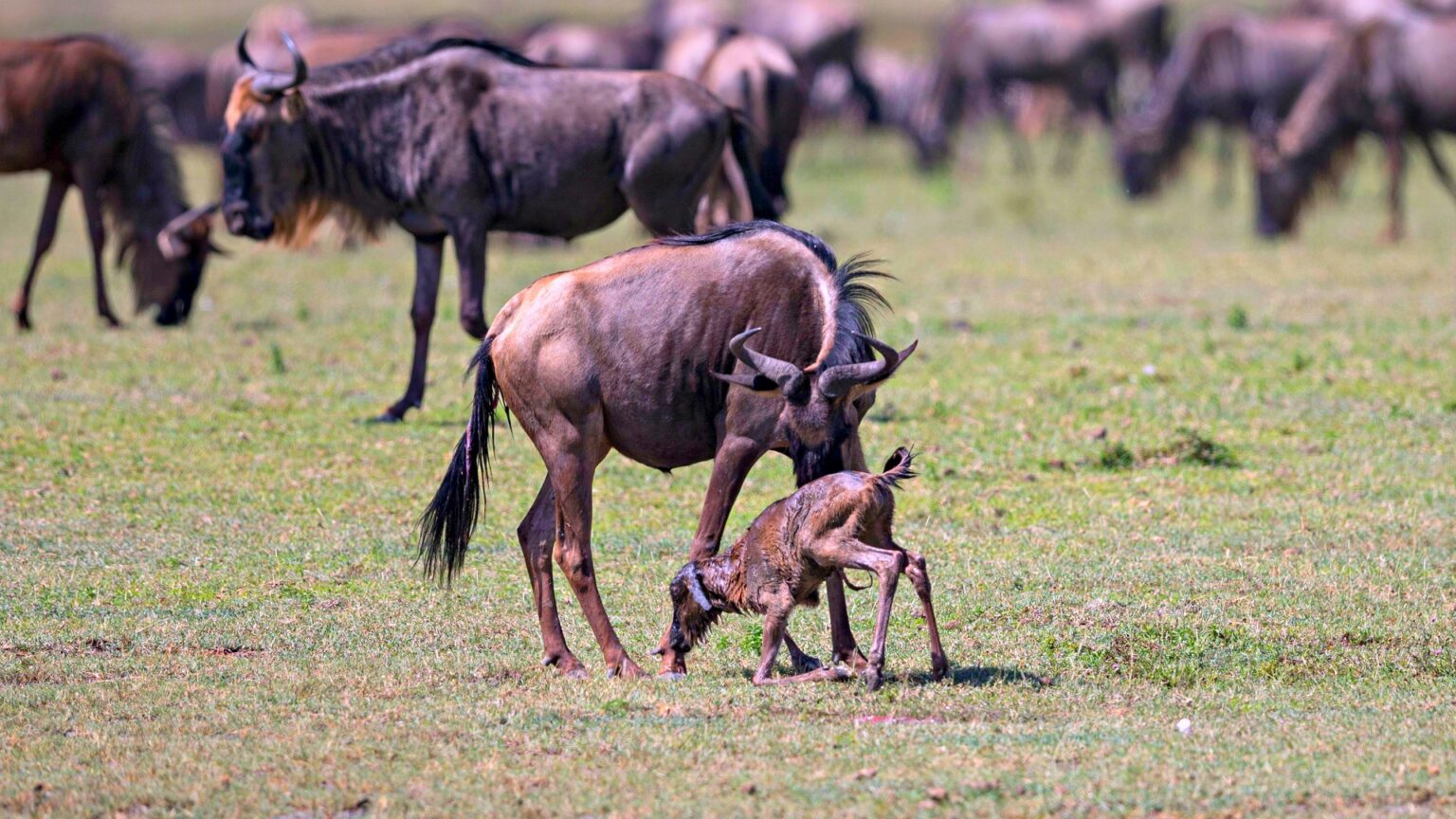
Wildebeest Calving Season Safari Overview Witness one of nature’s most spectacular events—the...
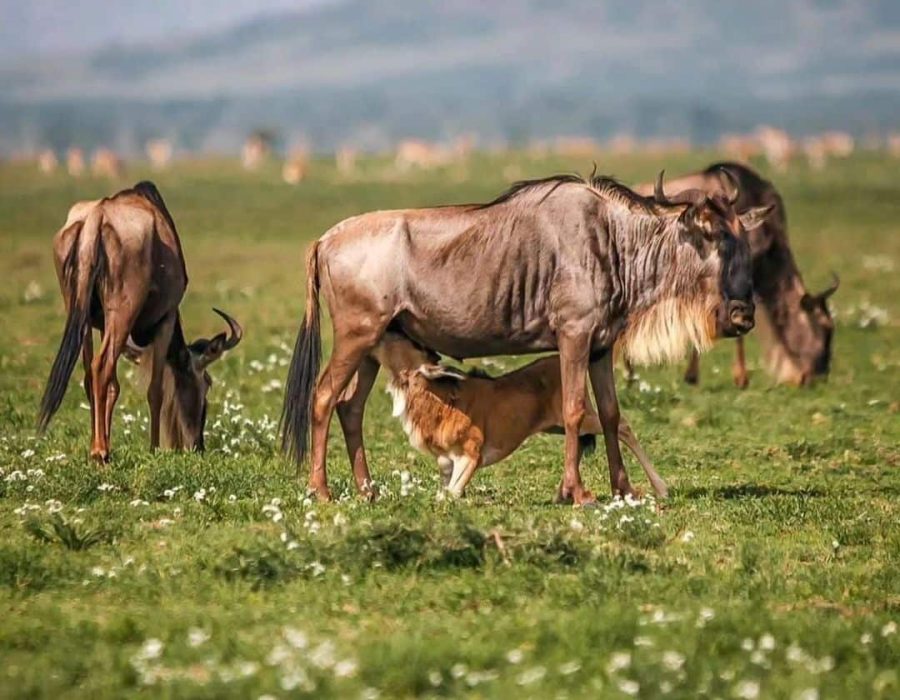
Wildebeest Calving Season Safari Overview This 6-day wildebeest migration calving safari highlights...
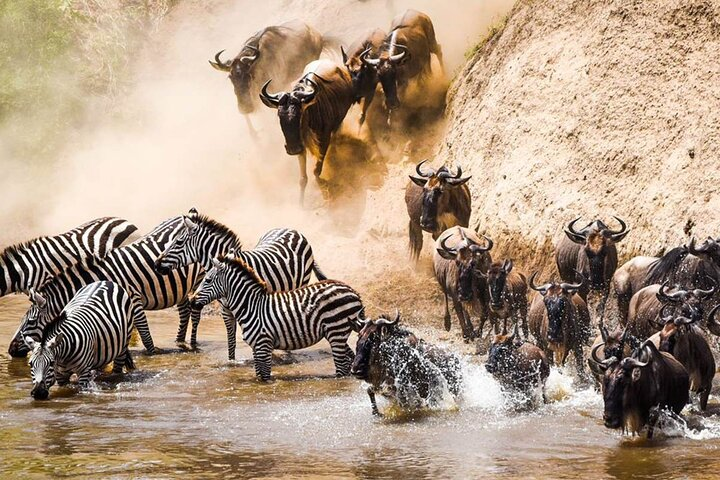
Wildebeest River Crossing Safaris
The most iconic and dramatic phase occurs when the herds reach the northern Serengeti and must cross the Mara (and sometimes Grumeti) River to reach the greener pastures of Kenya’s Masai Mara. Crossings typically take place between July and October, with the peak often in July–August or into September, depending on the rains. Massive columns of animals gather on the riverbanks—sometimes for days—before plunging into the water. They face strong currents, steep banks, and large Nile crocodiles waiting below, while predators on both sides take advantage of the chaos. Not every animal attempts the crossing, and herds often split, with some remaining in the northern Serengeti.
Where can you see the river crossing Season?
The best viewing is along the Mara River in the northern Serengeti (areas such as Kogatende and the Lamai Triangle in Tanzania) and in Kenya’s Masai Mara National Reserve (and adjacent conservancies). Crossings can occur at various points along the river; historical “crossing points” are popular vantage spots, though exact locations shift with the herds.
Why Should You Choose a Wildebeest River Crossing Season Safari?
This is the classic, high-drama highlight of the migration that most people associate with wildlife documentaries. The sheer scale of animals massing and the life-or-death intensity of the crossings create unforgettable, adrenaline-filled moments. It coincides with the dry season in many years, offering generally good game-viewing conditions and the chance to see large concentrations of predators. While it is the busiest period for tourism, staying in private conservancies or well-positioned camps can reduce crowds while maximizing viewing opportunities.
River Crossing Season Safari Overview This carefully designed 5-day safari offers an excellent...
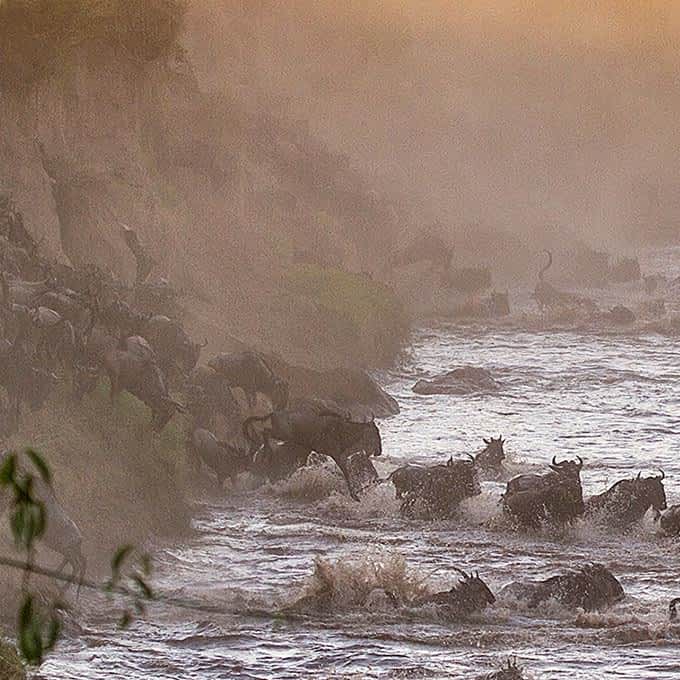
River Crossing Season Safari Overview Embark on the ultimate adventure with this comfortable...
Wildebeest Calving Season Safari Overview This privately guided 15-day cross-border safari is...
Travel
Where to Stay During the Wildebeest Migration
Accommodation choices depend heavily on the season and your preferred level of luxury or exclusivity. Options range from permanent lodges to mobile tented camps that relocate to follow the herds.
- Calving season (southern Serengeti / Ndutu area, roughly January–March): Look for lodges and camps around Ndutu and the southern plains. Mobile or semi-permanent camps that position themselves near the herds are particularly effective. Permanent options in the broader southern/central Serengeti also work well when the animals are concentrated there.
- River-crossing season (northern Serengeti and Masai Mara, roughly July–October): Prioritize camps near the Mara River. In the northern Serengeti, properties around Kogatende or the Lamai Triangle (such as those offering views of crossing points) are excellent. In the Masai Mara, both lodges inside the National Reserve and those in the surrounding private conservancies are popular; conservancies often provide fewer vehicles, night drives, and walking options.
Popular styles include luxury tented camps (some with private plunge pools or river views), classic permanent lodges, and true mobile camps that move with the migration for maximum flexibility. Book well in advance—especially for the river-crossing months—as the best locations fill quickly, often a year or more ahead. Combining two or more camps in different zones (for example, southern then northern Serengeti, or Serengeti then Masai Mara) increases your chances of being in the right place as the herds move.
